


In this article, I will introduce a set of grammar clarifying body psychoanalysis, which extends not only to psychopathology, itself primarily interpreted as being bottom-up in terms of evolutive time, but also, to clinical psychotherapy, that follows. Perhaps I am outlining a new position, certainly it takes the Reichian paradigm deeper, or is, rather, a “change in the visual gestalt” as Kuhn might put it. It represents a change in the mental architecture of observation which emerges from a different way of feeling, I might add. It is a paradigm which reads the unconscious in its entirety, because the unconscious is undoubtedly a “mirror” for what has been deposited in the body.
IN THE SPOTLIGHT
PODCAST WITH MICHAEL OSTROLENK
PODCASTS
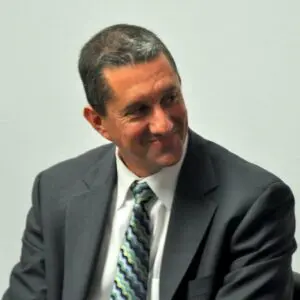
Michael Ostrolenk is a licensed psychotherapist who completed his MA in Transpersonal Counseling Psychology at John F. Kennedy University and did postgraduate studies in somatic psychology at the California Institute for Integral Studies . He is certified in Spiral Dynamics and Wade Mindsets. Michael is Director of Human Resilience at the Apeiron Center for Human Potential, Head Instructor/Master Coach at SEALFIT’s  Unbeatable Mind Academy , Director of Relationships and Resilience at the S.H.I.F.T. Institute and creator of the Emergent Human coaching and education program.
Welcome to “The Emergent Human where we explore Optimizing Health, Embodied Spirituality and Post Conventional Living. I am Michael Ostrolenk, a therapist, coach and educator and I am your host.
Today I am talking with Steven Kessler, a psychotherapist who has studied many different healing modalities and maps of personality, including the Enneagram (with Helen Palmer), NLP, energy work, Thought Field Therapy, and EFT (Emotional Freedom Techniques or tapping). For 20 years he has been a student of Lynda Caesara, studying Character Structure, the direct perception of energy, and shamanism in the lineage of Grandfather Two Bears and the Southern Seers tradition. He is the bestselling author of The 5 Personality Patterns: Your Guide to Understanding Yourself and Others and Developing Emotional Maturity. ( https://www.amazon.com/Personality-Pa… )
During the interview, Steven takes us through the developmental tasks a person needs to master, both in utero and during childhood, and the consequences of failing to master each of those tasks. He outlines the safety strategies we adopt to try to feel safer during that time and how each safety strategy develops into a pattern that becomes part of our personality. He then discusses how our personality patterns shape our interactions with others and the value of getting out of our personality patterns and returning to simply being present in the moment.
The 5 Personality Patterns
Today’s show is brought to you by Somatic Psychotherapy Today. https://somaticpsychotherapytoday.com/
BODY MIND SPIRIT

Somatic Therapy for Executive Burnout: Reading the Body That Will Not Slow Down
The executive in the chair says the quarter went well. Her shoulders are up near her ears, her breath sits high in her chest, and her jaw is working on something she has not said. This is a composite, drawn from patterns common in work with executives, not a single person. For many high achievers, the body is the first honest report in the room, and the last one anyone has asked to hear.
Somatic clinicians know this already. What I want to offer here is a closer look at how this plays out with people whose job is to override discomfort and keep delivering, and a few ways of working that have helped me stay useful to them.

When Regulation is Not the End
Regulation is not a small achievement, and I do not treat it as a preliminary stage before something more important. It is much of what makes any of this possible. But it is not always the end of the work. SPIRALAYA is a developing somatic-relational clinical model that grows from my professional training and influences, as well as my clinical observations. Its central clinical focus is the freedom available in relation to what becomes accessible and charged. Its broader aim is to expand a person’s capacity for life. When something becomes accessible and charged, three questions organize the work: What is becoming accessible now? What else might it be? What other possibilities are there? How much freedom remains in relation to it?

Listening to the Living Body: What Gendlin’s Focusing Approach Contributes to Somatic Psychotherapy
Somatic psychotherapy has taught us to listen to the body. Eugene Gendlin invites us to take relational embodiment one step further and listen not only for what the body is expressing, feeling, or remembering, but for a vague yet palpable felt sense of what is emerging and not yet fully known. The body, he notes, does not first exist and then enter relationship; living is interaction from the beginning. Through the lens of Gendlin’s work, Charlotte Howorth explores what we mean by “body” in somatic psychotherapy and answers the question: what is this body that senses?
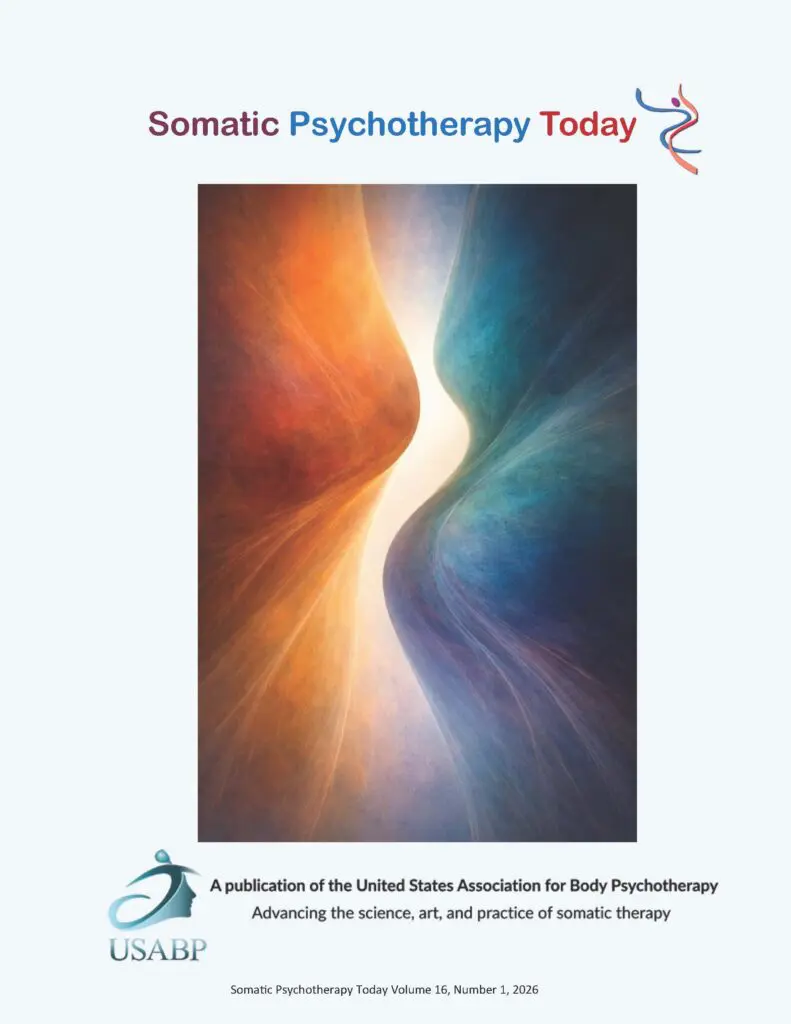
Somatic Psychotherapy Today Volume 16, Number 1 2026
Welcome to SPT Magazine, Volume 16, Number 1, 2026. A shared thread emerges in our articles and book reviews: an exploration of how we come to know ourselves and one another through embodied experience, relational presence, and deeper listening. Whether addressing trust, trauma, pleasure, meaning, or somatic organization, the pieces in this issue invite us to consider how healing and transformation unfold when body, perception, and relationship are brought more fully into awareness.
Finding the Fourth Position: Beyond the Trauma Triangle
In her article entitled, “Finding the Fourth Position: Beyond the Trauma Triangle,” Dr. Elya Steinberg explores a well-known concept of the trauma triangle, where people oscillate between one of three positions: victim, persecutor, and bystander, and how they become internalized in our psyche, our body. She details its impact on our lives. And then she offers a way out, what she calls the Fourth Position. The triangle, she writes, is where we are stuck. The fourth position is where we are free. We are human beings capable of consciousness, capable of choice, capable of meeting one another beyond the triangle in a place where genuine transformation takes place.
RELATIONAL MINDFULNESS

RELATIONAL MINDFULNESS WITH SERGE PRENGEL

Embodied Spirituality
In my work, I am accustomed to thinking in terms of embodied experience. That is, mind and body are not separate entities. I think of the mind as an emerging property of the human organism. Where does the notion of spirituality fit with this kind of outlook? The word “spirituality” refers to “spirit”. Traditionally, spirit is seen as immaterial, the opposite of flesh and blood. It is what animates the body, gives it life. In many traditions, it is something that leaves the body after death, and continues to live on its own once disembodied. So, essentially, the word “spirit” evokes the very opposite of “embodiment.” There is such a chasm between these two notions that it makes it hard to conceive that they could be integrated. Indeed, if you only contemplate these two propositions as logical statements, you simply cannot find a way to reconcile them.
SPT BOOKSHELF
I am text block. Click edit button to change this text. Lorem ipsum dolor sit amet, consectetur adipiscing elit. Ut elit tellus, luctus nec ullamcorper mattis, pulvinar dapibus leo.
I am text block. Click edit button to change this text. Lorem ipsum dolor sit amet, consectetur adipiscing elit. Ut elit tellus, luctus nec ullamcorper mattis, pulvinar dapibus leo.
I am text block. Click edit button to change this text. Lorem ipsum dolor sit amet, consectetur adipiscing elit. Ut elit tellus, luctus nec ullamcorper mattis, pulvinar dapibus leo.