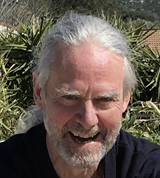
By Maria Strömberg
Introduction: When the body doesn’t know it is safe
 It is an ordinary workday. You sit in front of the computer, focused, still. Outwardly everything appears calm – but inside something quiet is going on: a subtle restlessness, tension in the body, slightly shallow breathing, a sense of not quite being enough, maybe a need to keep control.
What is the body trying to say?
We live in a time when “safety†is talked about a lot – but most often in terms of external conditions. Few people talk about what safety actually feels like. What makes us sometimes feel safe even in uncertainty, and at other times anxious, even when everything on paper looks fine?
Here I want to offer a different perspective – or perhaps more accurately, a return. An understanding of safety that is not only biological, but lived: where perception, the body and conscious seeing come together in the experience of trust.
The biological ground – what neuroscience shows us
In modern neurobiology, our understanding of safety has deepened through research on the autonomic nervous system (ANS), and in particular through Stephen Porges’ polyvagal theory (Porges, 2022). His concept of neuroception describes the body’s unconscious reading of signals – facial expression, tone of voice, posture – to decide whether we are in a safe or threatening environment.
When our surroundings are perceived as safe, the ventral vagal system is activated, allowing for calm, openness and social engagement. When signals of safety are missing, the sympathetic nervous system (fight/flight) or the dorsal vagal branch (freeze/collapse) takes over.
Many studies in affective neuroscience have confirmed how crucial these signals are for emotional regulation (e.g. Dana, 2018; Fredrickson, 2001). Newer research has also shown that the heart has its own network of neurons – a kind of “mini-brain” that includes sensory neurons, motor neurons, and interneurons – that interacts directly with the brain and influences emotional processing (Karolinska Institutet, 2024). This neural network helps explain why body-close sensations such as touch, breathing or heart rhythm can be a direct gateway into felt safety.
“Every emotion quickens the work of the heart and thus the lungs.†– Charles Darwin, The Expression of the Emotions in Man and Animals (1872)
 Darwin already emphasized that emotions have direct physiological effects. They do not only change our inner state, but concretely alter how heart and breathing function. All of this supports the view that safety cannot be reduced to a cognitive idea – it must be experienced in the body.
In classical polyvagal understanding, the ventral state is often described as a calm branch of the parasympathetic system – a kind of “rest-and-digest†mode without activation. In my earlier work (Strömberg, 2025) I have instead described the ventral state as what I call a living gateway – a dynamic threshold where both sympathetic movement and parasympathetic rest can be present at the same time. Safety is not stillness; it is the capacity to be in motion without leaving oneself.
From signal to experience – safety as felt sense
Neurobiology shows us what happens in the body – but not how it feels from the inside. For me, safety is not just a state, but a feeling. It is only when the body senses safety that we truly feel safe.
Thoughts, however wise, move in the hypothetical. They try to create safety by imagining it. But safety becomes real only when it is experienced – here and now – in the body. This does not happen through interpretation, but through anchoring: in the floor under our feet, the sounds in the room, the movement of the breath.
Real trust does not arise when we try to control reality – but when we can rest in it as it is.
In many Indigenous traditions, perception and knowledge are not separated from feeling – they are one and the same movement. To perceive something – to feel and to know – is not a theoretical act, but a lived experience that saturates the whole body (Abram, 1996; Ingold, 2000).
This insight resonates with what affective neuroscience is now describing: that emotions are not an “add-on†to perception, but its living core. The kind of embodied knowing that many Indigenous cultures call “the wisdom of the body†has received neurobiological support through Antonio Damasio’s notion of somatic markers – the way the body guides decisions and experience through emotion-laden, interoceptive signals (Damasio, 1999). Others, such as Craig (2009), have highlighted the anterior insula as a key hub where these interoceptive signals are integrated into conscious awareness – which fits this view of safety as something we literally feel in the body.
To read the entire article, please click here
Photo credits: Computer, Christin Hume, on Unsplash; gateway, Andrea Kunh from Pixabay.