


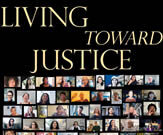
Living Toward Justice: A Time Capsule
Living Toward Justice emerged from the Living Justice Project, a global ethnographic initiative carried out in 2022 and coordinated by Sonya Pritzker, an anthropologist and somatic practitioner. The collaborative project brought together more than fifty practitioners working at the intersections of embodiment, healing, and social justice (all of whom are named as co-authors). Pritzker and the collective worked collaboratively to produce an archive of collective memory: a curated collection of reflections, observations, images, practices, dreams, poetry, and inquiries. Rather than writing a how-to guide offering new solutions or a study demonstrating the outcomes of embodied social justice approaches, Pritzker frames the book as a shared time capsule of individual practitioner entries on the embodied ways they were living toward justice at a specific historical juncture.
Breathwork and Psychotherapy: Clinical Applications for Healing and Transformation
Breathing, something everyone does who's alive, is coming to the forefront in psychotherapeutic settings. Colleagues are offering workshops and presentations on breathwork, and Norton Publications sent me Jessica Dibbs’ new book, Breathwork and Psychotherapy. She’s written a comprehensive compendium that’s part textbook, part training guide, part personal memoir, and part invitation to experience the life-altering existence we can achieve when we incorporate breathwork into our daily lives.

The Prenatal Shadow: Healing the Trauma Experienced Before and At Birth
Cherionna Menzam-Sills’ latest book, The Prenatal Shadow: Healing the Trauma Experienced Before and at Birth, offers an in-depth exploration of birth shadows, providing insights on how to address and heal these aspects to fully realize our inherent potential. The Prenatal Shadow is accessible to the lay reader and satisfying for the experienced practitioner in prenatal and perinatal somatics. For the lay reader just discovering the paradigm, Menzam-Sills has a friendly, gentle, and encouraging voice born out of decades of study and experience. Her authority is evident as she weaves a narrative of early development, autonomic nervous system states, trauma-informed care, embryonic development, prenatal and perinatal dynamics, and therapeutic interventions. Her ability to access research and quote pioneers who have influenced her work lends the narrative depth, while narratives from clinical studies provide the work with breadth. Her voice also illustrates the command of someone who has deeply explored the experiences of the “little one,” or the sentient baby. This is someone everyone can learn from.

The Ethical Assassin: A Vigilante’s Memoir
I don't typically review fiction books but having read and reviewed several of Dr. Ferraiolo’s books, I was curious how he wove philosophy into a fictional character’s psychological well-being. The title alone—An Ethical Assassin- caught my attention. Can killing be considered ethical?

What Sustains Me
What Sustains Me is a collection of personal essays written by seven therapists who use their skills for observation and self-reflection to dive into their lives and explore the experiences that brought them to where they are, who they are, and why they are here today. Each shares a deeply personal reflection of self and others, their initial wounds in childhood, and the continual assaults that resulted from self and others. They are vulnerable and intimate. There’s a sense of expansion as each writer breathes life into words landing on the page.

Polyvagal perspectives: interventions, practices, and strategies
As a seasoned laboratory scientist, Stephen W. Porges presented his polyvagal theory (PVT) in 1994 and simultaneously started a revolution. His research and resultant theories reframed our understanding of the ANS’s impact on stress, resilience, sociality, feelings of safety, and more. Porges’ newest book, Polyvagal Perspectives: Interventions, Practices, and Strategies, discusses concepts embedded in his original theory that transcended its theoretical framework. It represents his desire to ‘clarify his original theory and rectify potential misunderstandings by documenting its scientific foundation’ (pg. 24) and counter academic attacks and misrepresentations of clinical applications. The materials also demonstrate that a polyvagal perspective may deepen our understanding of vagal impacts on human health and experience.
Polyvagal Perspectives: Interventions, Practices, and Strategies
After decades of witnessing misunderstandings and misrepresentations, Dr. Stephen W. Porges wrote Polyvagal Perspectives: Interventions, Practices, and Strategies to set the record straight. He wanted to “clarify his original theory and rectify potential misunderstandings by documenting its scientific foundation” (pg. 24). Porges didn’t propose that PVT be proven or disproven. He wanted further research to inform and modify the theory and provide “a perspective to frame research questions—it is not a static theory” (pg. xiv). PVT consists of two components: a series of hypotheses “driven and future-oriented which could potentially lead to enhancements of mental and physical health” (pg.70) and a descriptive model. Porges wanted to emphasize the role of our autonomic state as “an intervening variable in how we respond to internal and external cues” (pg. 71).

Polyvagal Prompts: Finding Connection and Joy Through Guided Explorations
Beneath our “level of conscious awareness, our nervous system directs our movement toward and away from people, places, and experiences” (Dana & Rolfe, 2024, pg. 56). And this guidance is critical to our health and well-being. But we aren’t born knowing how to do it. Deb Dana, LCSW, and Courtney Rolfe, LCPC joined forces to write “Polyvagal Prompts: Finding Connection and Joy Through Guided Explorations.” They know we don’t innately know how to self-regulate our physiological and psychological states—we learn by co-regulating with attuned caregivers.

The Mindfulness and Character Strengths Workbook
The Mindfulness and Character Strengths Workbook is everything I hoped for and more. It is a well-written, easy-to-follow, detailed to the nth degree workbook with extensive, free online materials to support the process including audio-guided meditations. Congratulations Ryan on a much-needed workbook to support people exploring character strengths and their integration with mindfulness.

The ‘New’ Collected Papers of Biodynamic Psychology, Massage & Psychotherapy: 2022
The ‘New’ Collected Papers of Biodynamic Psychology, Massage & Psychotherapy was produced in celebration of 100 years of Gerda Boyesen’s birth. “There are about 150 substantive articles from 50 different authors. There are more than 1,500 pages and over 850,000 words. It is a collection, a canon, a compilation, an anthology, an album, a compendium, possibly even a treasury.” Thank you Courtenay for providing our readers with a free comprehensive outline, available on our website.